Buying in the Palm Beaches often means navigating financing that is anything but standard. If you are coordinating with a private bank, juggling advisors, or eyeing a unique waterfront property, the process can feel complex. You want clarity on loan options, timelines, and what lenders will expect so your closing moves with precision. This guide breaks down jumbo and private bank financing in Palm Beach County and shows you how to prepare for a smooth, confidential close. Let’s dive in.
Jumbo, portfolio, and private bank lending
Understanding how lenders categorize your loan helps you pick the right path.
- Jumbo loan: Any mortgage above the conforming loan limit set by the FHFA. For 2024, the baseline single‑family limit was $766,550 and the high‑cost ceiling was $1,149,825. Always confirm current limits before you lock strategy.
- Portfolio loan: A mortgage the lender keeps on its own balance sheet. These loans allow more flexibility on documentation, terms, and collateral.
- Private bank financing: Bespoke lending through a bank’s wealth division. These solutions often use asset‑based underwriting, securities‑pledged lines, and custom amortization.
In Palm Beach County, high property values, waterfront estates, and second‑home purchases make jumbo and private bank structures common. Many transactions involve wealth managers, attorneys, and tax advisors from the start.
When jumbo financing makes sense locally
High single‑property values push many buyers well above conforming limits. If you are purchasing on Palm Beach Island or along the coastal Gold Coast, jumbo or private bank financing is often the realistic route. Seasonal and relocation buyers frequently prefer private bank solutions that align with broader balance‑sheet planning.
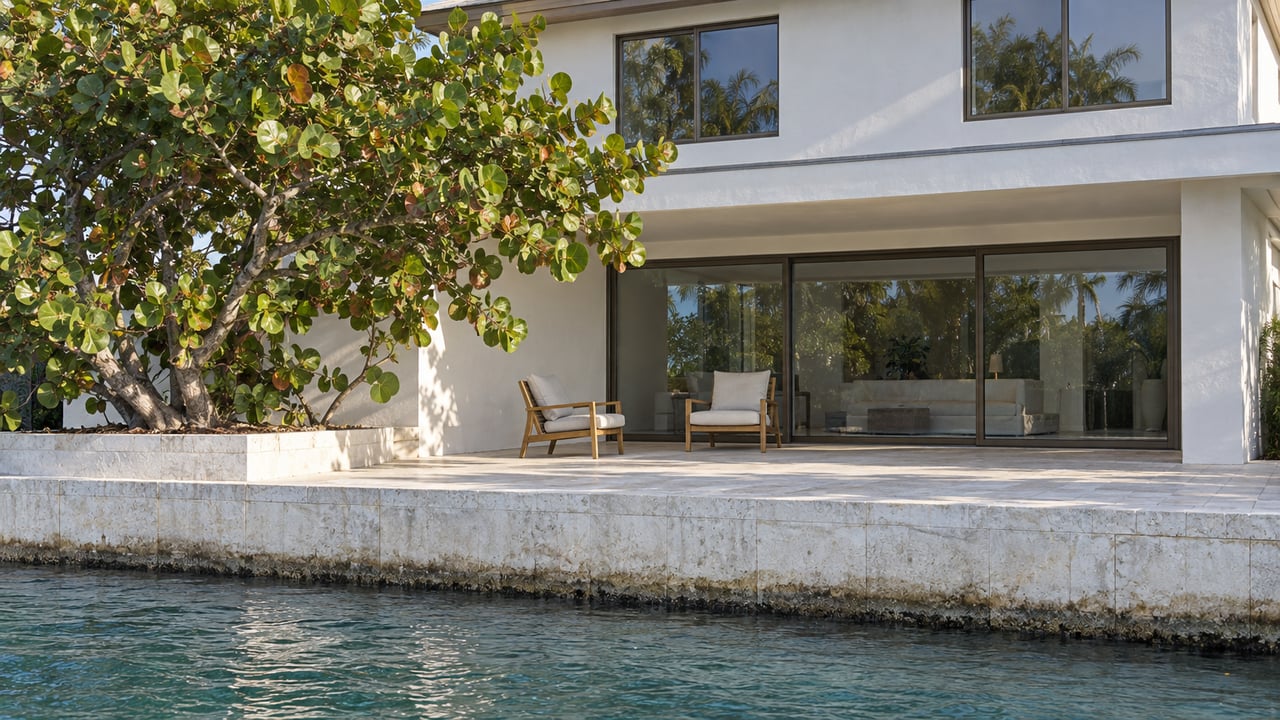
Waterfront and one‑of‑a‑kind properties also carry extra underwriting focus. Lenders may request additional inspections or engineering reports for seawalls, bulkheads, docks, or elevation. Being prepared for this scrutiny helps you control the timeline.
How lenders underwrite in Palm Beach County
Conventional jumbo lenders
Conventional jumbo lenders emphasize credit, liquidity, and documented income. You can expect strong credit requirements, meaningful reserves, and down payments that are commonly 20 to 30 percent for primary residences. Most lenders use debt‑to‑income limits, often in the 43 to 50 percent range, with exceptions in select cases. Full documentation is typical, and pricing varies with market conditions and lender appetite.
Portfolio lenders
Portfolio lenders set their own standards and keep loans on their books. They may accept non‑standard documentation, adjust loan‑to‑value based on strategy, or offer longer amortizations. Cross‑collateralization is more common here. Credit committee processes can accelerate a decision or add time depending on the institution.
Private bank and wealth management
Private banks often use asset‑based underwriting. Instead of focusing only on income and DTI, they evaluate your net worth, liquidity, and overall relationship. Securities‑backed lines and pledged‑asset loans can lead to faster approvals when collateral is liquid, but they come with margin‑call considerations. Some banks reduce or even waive tax‑return requirements if the loan is fully collateralized. In select cases, limited‑recourse structures are possible, subject to legal structuring and relationship scope. Pricing may improve when you bring or maintain assets under management.
Cross‑collateralization explained
Cross‑collateralization lets you combine multiple assets to support one purchase.
- How it is structured: One loan can be secured by multiple properties, or a primary mortgage can be paired with additional property pledges or second liens.
- Why it is used: To reach a target blended loan‑to‑value or to finance a larger purchase without adding cash.
- What to plan for: Title work is more complex. Each property must have clean, insurable title. Selling or refinancing one property later usually requires lender consent or specific release language. Early coordination with counsel, title, and your lender keeps the path clear.
Appraisal, insurance, and condo specifics
Appraisals for unique properties
Luxury waterfront estates often lack close comparables. Appraisers may widen the search area, apply qualitative adjustments, or complete desk reviews and second opinions. Expect this step to take longer for complex assets and be ready with recent sales data and property details.
Flood, elevation, and coastal engineering
Many waterfront homes sit in FEMA flood zones, which can require NFIP or private flood coverage. Seawalls, docks, and bulkheads typically need proof of proper permitting and compliance. Elevation, storm exposure, and prior claims affect insurability, and lenders will require adequate hazard, wind, and flood coverage before closing.
Insurance requirements and costs
Coastal Florida policies often include higher wind deductibles or exclusions. High‑value home premiums can be significant, so start this process early. Lenders expect proof of continuous coverage and a binder prior to funding.
Condominium and HOA reviews
Jumbo lenders often apply stricter standards to condo associations. Underwriters look for adequate reserves, stable financials, acceptable owner occupancy, and sufficient insurance. Litigation, special assessments, or weak reserves can delay or derail funding. Timely estoppel letters and complete condo documents help you avoid last‑minute issues.
Timelines and what affects speed
Typical ranges vary by lender and property profile:
- Conventional jumbo with full documentation: Often 30 to 45 days when appraisal, title, and HOA estoppel arrive on time.
- Portfolio lender: Often 30 to 60 days, depending on credit committee review and added due diligence.
- Private bank or asset‑based loan: As fast as 7 to 21 days when collateral is highly liquid and the bank controls appraisal and title. Complex cross‑collateral or permitting issues can extend to 30 to 90 days.
Key coordination points
- Engage your private bank relationship manager early to confirm documentation, including whether tax returns are needed.
- Order appraisal, title, HOA estoppel, survey, and inspections in parallel to save calendar time.
- Obtain a clear pre‑approval or pre‑underwrite with known conditions before you sign a contract.
- Start insurance procurement early for wind, hazard, and flood, especially for waterfront assets.
- Gather permitting and engineering records for seawalls and docks in advance.
Common causes of delay
- Appraisal disputes or the need for multiple reviews.
- HOA or condo issues, including litigation or special assessments.
- Title exceptions or unresolved liens.
- Delays binding wind or flood insurance.
- Added complexity from cross‑collateral structures and subordinations.
Documentation checklist for a smooth close
Being organized at the outset is the single best way to protect your timeline.
Core documents
- Government‑issued photo ID, Social Security number, and proof of address.
- Recent bank statements for personal and business accounts. Some lenders request up to 6 to 12 months for large transactions.
- Brokerage and custodial statements showing liquid securities and assets under management.
- Two to three years of tax returns, including business returns if applicable, unless reduced by asset‑based underwriting.
- Trust, entity, or LLC documents, including operating agreements and trustee certificates if purchasing in an entity.
- Employment verification or business ownership documentation.
Asset‑based and private bank addenda
- Detailed asset ledger and custodian contacts for pledged securities.
- Letters from your wealth manager or private banker confirming asset positions and liquidity.
- Third‑party valuations for any illiquid assets you want considered.
- Documentation for other pledged collateral such as aircraft, yachts, fine art, or additional real estate owned.
Property‑specific documentation
- Recent survey and any improvement or boundary updates, if available.
- Seawall and bulkhead inspection reports, engineering studies, and permitting history.
- HOA or condo bylaws, financials, insurance certificates, meeting minutes, and any litigation disclosures.
- Prior insurance loss history and claims documentation.
Legal and tax coordination
- Retain counsel experienced with cross‑collateral, trust ownership, and Florida coastal title.
- Coordinate with your tax advisor on entity structure, cross‑collateral implications, 1031 strategy for investments, and residency considerations.
- Align early with bank counsel for bespoke loan language or intercreditor agreements.
Steps to accelerate your closing
- Engage your private bank or portfolio lender immediately after offer acceptance to lock approval conditions.
- Order appraisal, inspection, title, estoppel, and survey at the same time.
- Provide a clean, well‑indexed document package and custodial contact authorizations on day one.
- Pre‑book an insurance broker experienced in Florida coastal risk.
- If cross‑collateralizing, assemble clean title chains and negotiate release mechanics before final docs.
How we help you navigate with confidence
You deserve a process that respects your time, privacy, and standards. Our role is to anticipate the Palm Beach‑specific issues that can slow a jumbo or private bank closing and to coordinate the right steps, in the right order, with your advisors. From early document readiness and insurance strategy to title, HOA, and appraisal coordination, we focus on clarity and control so you can move on your timeline.
If you are considering a purchase on Palm Beach Island or anywhere along the coastal Gold Coast, we welcome a confidential conversation about your plans. Connect with the Palm Beach Luxury Portfolio Group to discuss a tailored approach.
FAQs
What counts as a jumbo loan in Palm Beach County?
- A jumbo is any mortgage above the FHFA conforming limit. For 2024, the baseline was $766,550 and the high‑cost ceiling was $1,149,825. Confirm the current year’s limit before applying.
How do private banks evaluate UHNW borrowers?
- Private banks often use asset‑based underwriting that looks at net worth, liquidity, pledged securities, and the overall relationship, sometimes with reduced tax‑return requirements.
Will cross‑collateralization limit my ability to sell later?
- Usually you will need lender consent or a paydown per the release terms. Negotiate release mechanics and substitution options in your loan documents up front.
Do jumbo loans in Palm Beach take longer to close?
- They can, especially for unique or waterfront properties due to appraisals, title work, insurance, and condo reviews. Private banks can sometimes close faster with pledged assets.
What insurance will my lender expect on a waterfront home?
- Lenders typically require adequate hazard, wind, and flood coverage, with binders in place before closing. Elevation, storm exposure, and claims history influence cost and availability.